
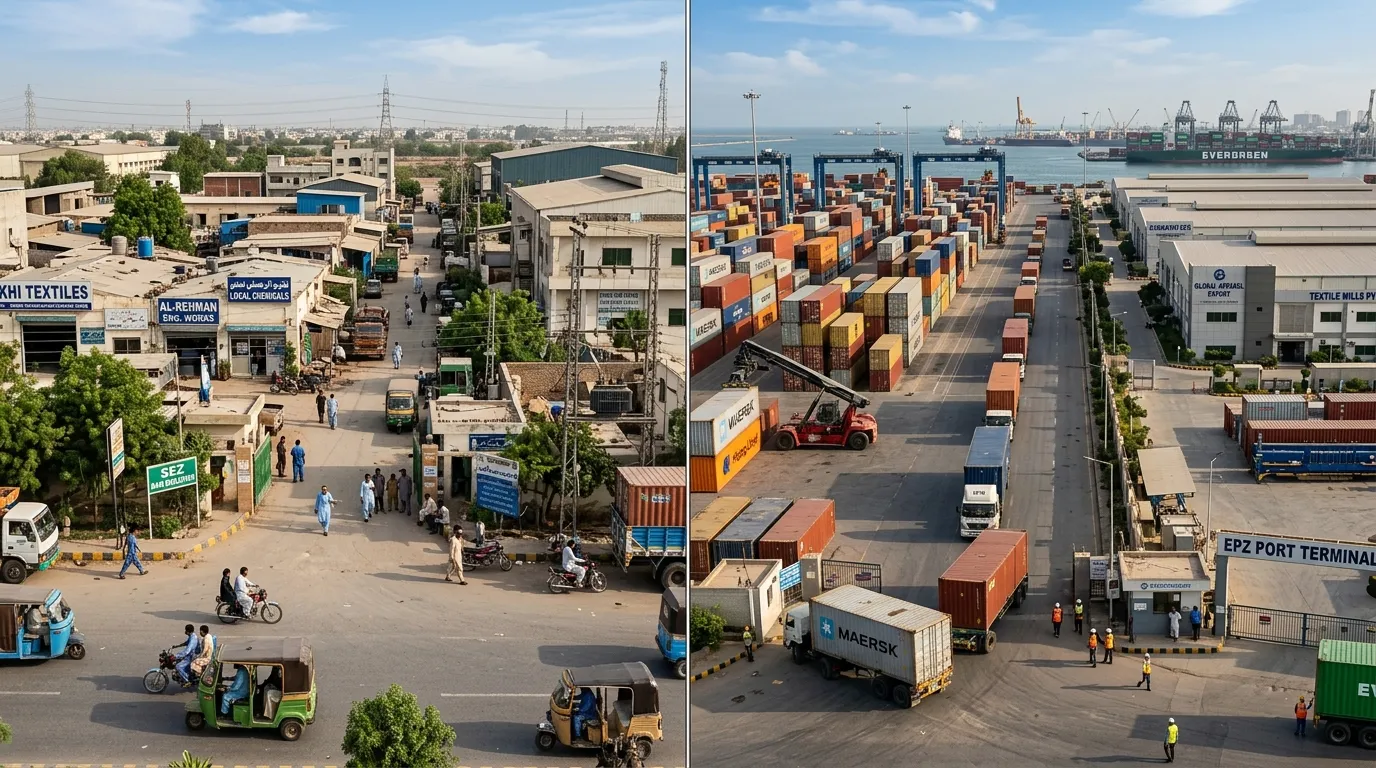
The difference between Special Economic Zones (SEZs) and Export Processing Zones (EPZs) in Pakistan lies in their purpose, regulatory framework, tax incentives, and market access, with SEZs supporting both domestic and export-oriented industries while EPZs are strictly designed for export-driven operations with deeper duty-free benefits.
This article provides a complete technical breakdown so you can clearly determine which structure fits your investment strategy.
What Is a Special Economic Zone (SEZ)?
A Special Economic Zone in Pakistan is a designated industrial area established under the Special Economic Zones Act, 2012 to promote industrialization, attract foreign investment, and support economic growth across multiple sectors.
SEZs are designed to accommodate a wide range of industries, including manufacturing, logistics, pharmaceuticals, automotive, and technology. These zones are not limited to exports and allow businesses to operate across both domestic and international markets.
Investors benefit from a one-time exemption from customs duties and taxes on the import of plant and machinery. In addition, SEZ enterprises are granted a 10-year income tax holiday, usually starting from the date of commercial production or as specified in approvals.
SEZs are typically developed with modern infrastructure and are often linked to large-scale national projects, ensuring long-term industrial sustainability.
What Is an Export Processing Zone (EPZ)?
An Export Processing Zone is a specialized industrial zone governed by the Export Processing Zones Authority Ordinance, focused exclusively on export-oriented production.
EPZs are structured to provide continuous duty-free import of raw materials, machinery, and intermediate goods used in manufacturing for export markets.
Businesses operating in EPZs are generally restricted from selling in the domestic market. Limited local sales may be permitted under specific regulations, but these are treated as imports and subject to full customs duties and taxes.
EPZs operate under a bonded system with strict customs control, ensuring that all imported goods are used for export production. This model supports efficiency, compliance, and global competitiveness.
Key Differences Between SEZ and EPZ in Pakistan
SEZs and EPZs differ across multiple technical dimensions including purpose, incentives, regulatory environment, and operational flexibility. The following subsections break down these differences in detail.
Main Purpose
SEZs are designed to promote broad-based industrial development, economic diversification, and employment generation. They support industries that serve both domestic and international markets.
EPZs, in contrast, are focused solely on increasing exports and foreign exchange earnings by facilitating export-oriented manufacturing and services.
Target Investors
SEZs attract a wide range of investors including local businesses, foreign companies, and joint ventures looking to establish a presence in Pakistan while serving multiple markets.
EPZs primarily target export-driven companies, especially foreign investors seeking low-cost manufacturing bases with minimal regulatory barriers.
Tax and Duty Incentives
SEZs provide a one-time exemption on customs duties for plant and machinery along with a 10-year income tax holiday. However, ongoing imports of raw materials may be subject to duties depending on applicable policies.
EPZs offer broader and continuous exemptions, including duty-free import of raw materials, machinery, and components. They also provide exemptions from income tax, sales tax, and federal excise duty for export-related activities.
This makes EPZs particularly advantageous for industries that rely heavily on imported inputs.
Market Access
SEZ-based companies can freely sell their products within Pakistan as well as export to international markets. Domestic sales are treated as regular commercial transactions under local tax laws.
EPZ-based companies are primarily restricted to exporting their products. Any domestic sales are treated as imports and are subject to full duties and taxes, making local market participation less practical.
Ownership and Regulations
Both SEZs and EPZs allow 100% foreign ownership in most sectors, enabling investors to retain full control over their operations.
However, EPZs typically offer a more simplified regulatory environment with fewer compliance requirements due to their export-only focus. SEZs may involve additional regulatory oversight depending on the sector and nature of operations.
Location and Development
SEZs are often large-scale developments integrated with national infrastructure projects. They may include industrial clusters, residential areas, and commercial facilities, creating a comprehensive economic ecosystem.
EPZs are more compact and specifically designed for industrial production with dedicated customs control and security systems. They are usually located near ports, airports, or major trade routes to facilitate exports.
Major SEZs in Pakistan
Pakistan has several key SEZs that support industrial growth across different regions.
Notable SEZs include Rashakai Special Economic Zone in Khyber Pakhtunkhwa, Allama Iqbal Industrial City in Faisalabad, and Dhabeji Special Economic Zone near Karachi.
These zones are equipped with modern infrastructure, including road networks, utilities, and industrial facilities. Many are connected to major trade corridors, enhancing access to regional and international markets.
SEZs are often developed through public-private partnerships and are designed to attract large-scale investments across diverse industries.
Major EPZs in Pakistan
EPZs in Pakistan are managed by the Export Processing Zones Authority and are strategically positioned to support export activities.
The Karachi Export Processing Zone is the largest and most established, offering comprehensive industrial infrastructure and proximity to major ports.
Other EPZs include zones in Risalpur, Sialkot, and Saindak, each designed to support specific industries and regional economic activity.
These zones feature dedicated customs facilities, security systems, and infrastructure tailored for export-oriented operations.
Which Zone Is Better for Investors?
The choice between SEZ and EPZ depends on the investor’s operational goals and market strategy.
SEZs are more suitable for businesses that require flexibility to operate in both domestic and international markets. They are ideal for companies targeting local consumers or looking to establish a long-term presence in Pakistan.
EPZs are better suited for export-focused businesses that rely on imported raw materials and want to minimize production costs through continuous duty-free imports and tax exemptions.
Investors focused on cost efficiency, simplified regulations, and global supply chains will generally benefit more from EPZs, while those seeking broader market access may prefer SEZs.
Conclusion
SEZs and EPZs in Pakistan serve distinct roles within the country’s economic framework, each offering specific advantages based on business needs.
SEZs provide flexibility and support for diverse industrial activities, while EPZs offer a highly optimized environment for export-oriented operations with maximum fiscal incentives.
Understanding these differences at a technical level allows investors to select the most suitable structure for their investment, ensuring alignment with their financial, operational, and strategic objectives.
For investors comparing both options and planning setup, consulting with EPZ Consultants can help clarify requirements, costs, and the best structure based on your business model.
Also Read: Main Features of EPZs in Pakistan