
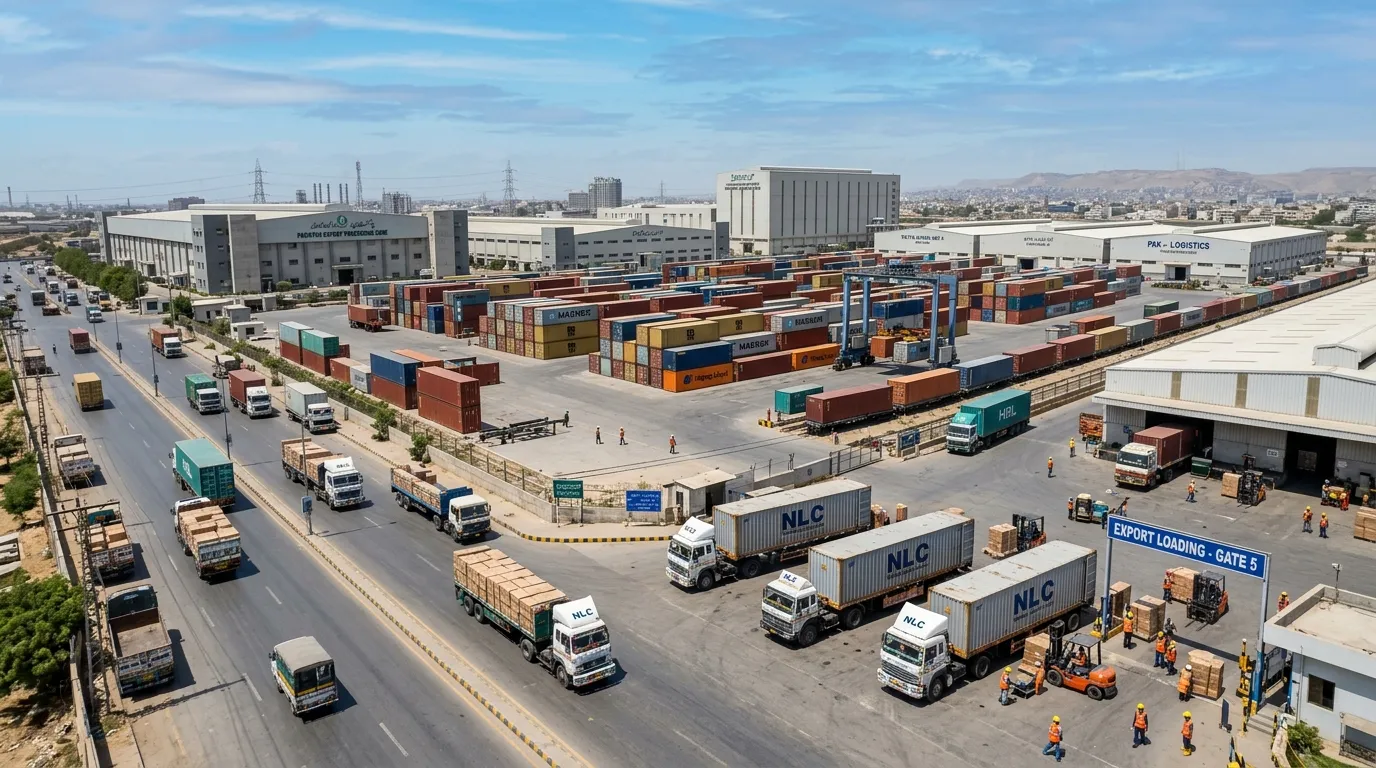
Investing in Export Processing Zones (EPZs) in Pakistan gives foreign investors tax exemptions, 100% ownership, duty-free imports, and streamlined regulations that significantly reduce costs and complexity while maximizing export competitiveness.
If you are evaluating Pakistan as an investment destination, this article outlines every key technical advantage you need to understand before making a decision.
Tax Exemptions and Duty-Free Imports
EPZs operate under a highly favorable fiscal regime structured to eliminate most taxation layers on export-oriented businesses.
Companies established in EPZs benefit from a complete exemption on income tax on profits derived from exports. This exemption is typically granted for a fixed tenure from the date of commercial operations, often around 10 years, depending on prevailing policies.
There is no sales tax applied on goods or services consumed within the zone. This includes production inputs such as raw materials, packaging, and intermediate goods. Federal excise duty is also not applicable, further lowering operational expenditure.
Custom duties on imported raw materials, components, and semi-finished goods are fully waived. This allows businesses to source globally without cost penalties, ensuring that pricing remains competitive in international markets.
Additionally, there is no withholding tax on imports into EPZs. This simplifies accounting and improves cash flow management.
Foreign investors are also allowed full repatriation of profits, dividends, royalties, and capital in foreign currency. There are no foreign exchange restrictions, which is a critical factor for risk management in cross-border investments.
100% Foreign Ownership
EPZ regulations in Pakistan allow foreign investors to retain full ownership of their businesses without requiring local equity participation.
This means investors can establish wholly owned subsidiaries and maintain complete control over operations, strategy, and financial decisions. There are no mandatory joint venture requirements, which is often a barrier in other emerging markets.
Foreign companies can appoint their own management teams, including expatriate staff. Visa and work permit processes are facilitated through EPZ authorities, reducing administrative delays.
There are also no restrictions on the transfer of shares between foreign entities. Investors can sell, merge, or restructure ownership without complex regulatory approvals, providing flexibility in exit strategies.
This ownership model aligns with international free zone standards and provides a secure and predictable investment environment.
Simplified Business Setup
EPZs are designed to reduce bureaucratic hurdles through a centralized regulatory system.
The Export Processing Zones Authority acts as a one-window operation that handles all major approvals. This includes company registration, licensing, customs permissions, and utility connections.
Investors are required to submit a project proposal outlining business activities, capital investment, and export plans. Once approved, a Letter of Permission is issued, allowing the company to begin setup and import machinery.
The time required to establish operations is significantly lower compared to standard industrial zones due to reduced documentation requirements and fewer regulatory layers.
There are also relaxed labor laws within EPZs, allowing flexible hiring practices and contract structures suited to export-oriented production.
For businesses that want expert support during this stage, working with EPZ Consultants can help ensure faster approvals and proper documentation.
Lower Operational Costs
Operating within EPZs provides a cost advantage across multiple expense categories.
Labor costs in Pakistan are comparatively low, and EPZs further enhance this advantage by allowing flexible wage structures and reduced compliance burdens.
Utility costs such as electricity, gas, and water are often subsidized or provided at competitive industrial rates within EPZs. Dedicated infrastructure ensures consistent supply, reducing downtime.
Land and facility costs are also lower compared to major commercial centers. Investors can lease plots or factory units at competitive rates, minimizing initial capital expenditure.
The elimination of import duties and domestic taxes further reduces the overall cost of production, improving profit margins.
Access to International Markets
EPZs are specifically designed to facilitate export-driven businesses.
Companies operating in these zones are allowed to import raw materials, process them, and export finished goods without restrictions. This creates a seamless production-to-export pipeline.
Pakistan has trade agreements and preferential access to multiple regions, including the European Union under the GSP+ scheme. This allows duty-free or reduced-duty access for a wide range of products.
EPZ-based businesses can leverage these agreements to enter global markets at competitive pricing, particularly in textiles, leather goods, surgical instruments, and light manufacturing.
Infrastructure and Utilities
EPZs are equipped with purpose-built infrastructure to support industrial operations.
This includes pre-developed industrial plots, factory buildings, internal road networks, and warehousing facilities. Security systems are also in place, including controlled entry points and surveillance.
Utilities such as electricity, gas, water, and telecommunications are provided through dedicated connections to ensure reliability.
Some EPZs also offer on-site customs offices, banks, and administrative centers, reducing the need for external coordination.
No Import Duties on Machinery
A major technical advantage of EPZs is the complete exemption from import duties on plant, machinery, and equipment.
Investors can import capital goods required for production without paying customs duties or taxes. This significantly reduces the initial setup cost.
There are also no restrictions on the type or origin of machinery, allowing businesses to source the most efficient technology globally.
Spare parts and maintenance equipment can also be imported duty-free, ensuring uninterrupted operations.
Long-Term Investment Security
EPZs provide a stable regulatory environment backed by government policies.
The legal framework governing EPZs is designed to protect foreign investments and ensure policy continuity. Incentives granted at the time of investment are typically honored for the duration of the approved period.
Investors are protected against nationalization, and dispute resolution mechanisms are available through local courts and international arbitration frameworks.
The ability to repatriate capital and profits without restriction further enhances investment security.
Strategic Location for Global Trade
Pakistan’s geographic position provides a strategic advantage for export-oriented industries.
Located at the intersection of South Asia, Central Asia, and the Middle East, Pakistan offers access to multiple regional markets.
Major EPZs are situated near key ports such as Karachi Port and Port Qasim, enabling efficient shipping and reduced logistics costs.
Connectivity through road networks and trade corridors, including routes linked to regional economic initiatives, further enhances access to international markets.
This positioning makes EPZs an effective base for companies targeting Europe, the Middle East, Africa, and Asia.
Conclusion
EPZs in Pakistan offer a highly optimized environment for foreign investors through tax exemptions, full ownership rights, duty-free imports, and efficient regulatory processes.
These zones reduce both initial investment costs and ongoing operational expenses while providing direct access to global markets.
For investors seeking a cost-effective and export-focused manufacturing base, EPZs present a technically sound and strategically advantageous option within Pakistan’s industrial landscape.
Also Read: Main Features Of EPZs In Pakistan