
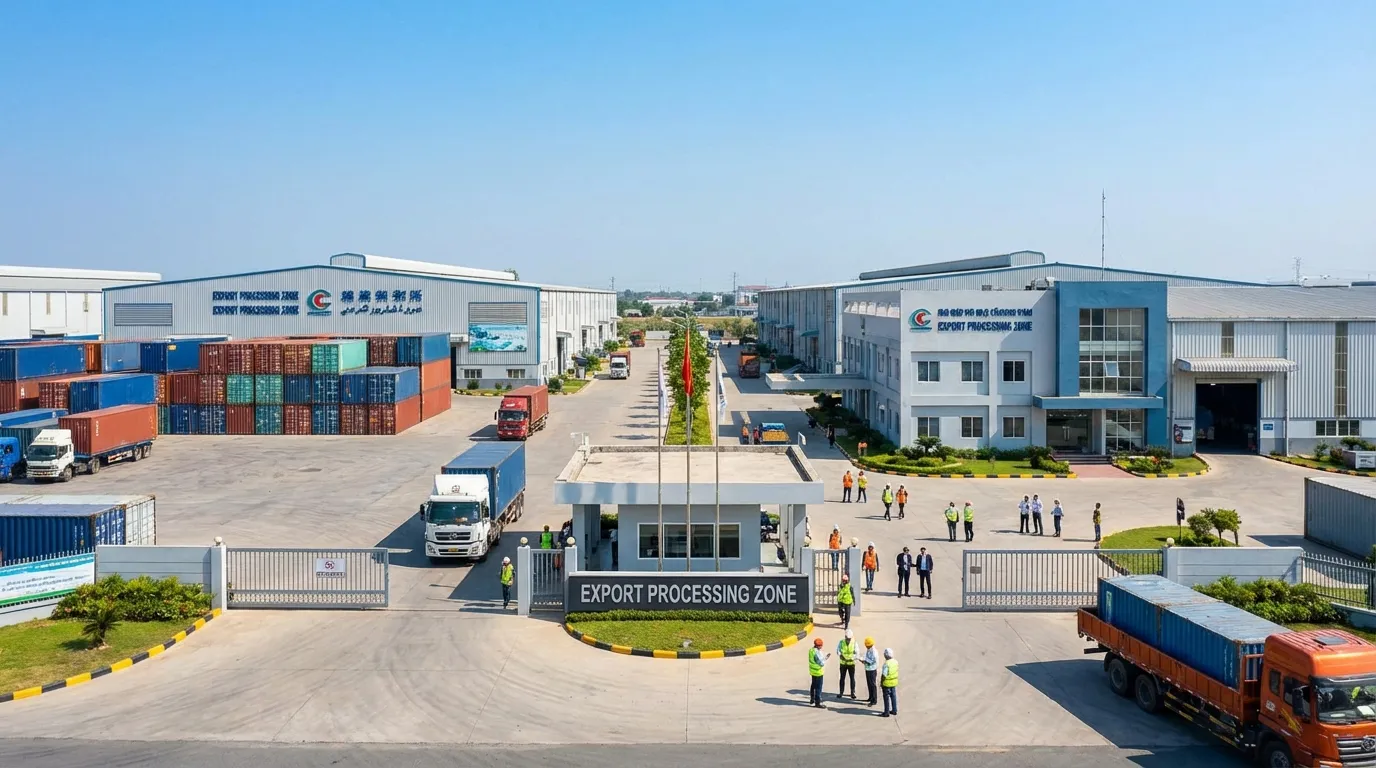
Investors entering Export Processing Zones in Pakistan often lose time, money, and operational momentum because they make avoidable planning and compliance mistakes rather than because the EPZ model itself is weak.
If you are planning to set up business in an EPZ, understanding these mistakes early will help you avoid delays, reduce cost leakage, and build a setup that actually runs smoothly under export conditions.
Keep reading because this article breaks down each mistake in a practical way so you can directly apply it to your investment planning instead of learning it the hard way on the ground.
Skipping Proper Market Research
A very common issue starts before the EPZ entry even happens, and that is skipping serious export market research. Many investors assume that EPZ status automatically creates export demand, but in reality EPZs only provide facilitation, not buyers.
Proper market research in this context means checking global demand cycles, import regulations in target countries, tariff barriers, and product compliance requirements like ISO standards, REACH compliance for chemicals, or textile labeling standards depending on your sector.
It also includes freight cost modeling, port accessibility from Pakistan, and lead time calculations because export competitiveness depends heavily on delivery speed and not just price.
Another technical gap is ignoring input supply chains. If your raw materials require import through bonded systems or special approvals under EPZA customs facilitation, any delay there directly affects production continuity.
Investors who skip this layer often face inconsistent export readiness even when factory setup is complete.
Choosing The Wrong Industry For EPZ
Not every industry benefits equally from EPZ frameworks, even though many investors assume otherwise. EPZs are structurally optimized for export oriented, high volume, standardized production systems that rely on customs duty exemptions and bonded import mechanisms.
Industries like apparel manufacturing, basic electronics assembly, and certain agro processing sectors align well because they have repeatable production cycles and predictable export orders.
However, industries that depend on highly customized production, fragmented supply chains, or frequent design changes often struggle inside EPZ operational rules.
The mistake usually becomes visible when production planning starts conflicting with export order variability, especially when regulatory clearance processes require fixed documentation for each shipment. That mismatch leads to inefficiency and underutilized capacity.
Underestimating Setup Costs
One of the most repeated financial errors is underestimating total project cost. Investors often focus only on land lease or factory shell cost and basic machinery, but EPZ setup involves multiple additional financial layers.
These include bonded warehouse registration systems, environmental compliance certifications depending on industry type, utility connection upgrades, internal logistics equipment like forklifts and loading systems, and security infrastructure required under EPZ operational guidelines.
On top of capital expenditure, working capital planning is often weak. Export businesses operate on delayed receivables, sometimes 30 to 120 day payment cycles depending on buyer terms like FOB or CIF arrangements.
This means liquidity planning must include raw material cycles, labor payroll, utility costs, and freight charges before export revenue actually arrives.
Many investors miscalculate this gap and face cash flow stress even when orders are strong.
Ignoring Regulatory Requirements
EPZs are not standard industrial zones, they operate under structured legal frameworks managed by the Export Processing Zones Authority and associated customs systems. Ignoring these frameworks leads to avoidable operational friction.
Key compliance areas include bonded manufacturing license approvals, import duty exemptions under EPZA rules, export shipment clearance documentation, and periodic audits depending on sector classification.
Each shipment may require specific documentation alignment with customs electronic systems, and even minor errors can delay container release.
There is also regulatory drift to consider. Rules are updated periodically, especially around customs facilitation, environmental standards, and import-export classification codes under HS code systems.
Companies that do not maintain compliance monitoring or advisory support often face sudden operational disruption.
Poor Location Selection Within EPZ
Even within a single EPZ, internal location selection can impact operational efficiency significantly. Investors often treat all plots or units as equal, but logistical positioning inside the zone matters.
Units closer to internal road networks, loading bays, and customs clearance points generally experience faster dispatch cycles. In contrast, units located deeper inside industrial clusters may face additional transport time and coordination delays for container movement.
Utility distribution is another technical factor. Power load distribution, water pressure consistency, and backup generator accessibility can vary slightly across zones.
Industries with continuous production requirements like textiles or food processing are particularly sensitive to these differences.
Weak Financial Planning
Financial planning issues usually emerge after operations begin. Export businesses operate on structured trade finance cycles, and ignoring them creates instability even in profitable setups.
Investors often fail to account for working capital turnover ratios, currency exchange fluctuations between PKR and USD or EUR, and freight volatility caused by global shipping rates. These variables directly affect net margins.
Another weak point is margin inflation assumptions. Many plans are built only on tax exemption benefits without stress testing real cost structures like logistics per container, wastage rates in production, and customs documentation handling costs. This creates unrealistic profitability expectations.
Overlooking Infrastructure Needs
EPZ infrastructure is generally better than regular industrial areas, but it is still not universally tailored for every industry. Assuming plug and play readiness is a mistake.
For example, textile manufacturing requires stable voltage power supply and uninterrupted steam or boiler systems. Electronics assembly requires controlled humidity and dust-free environments. Food processing requires cold storage integration and HACCP compliant hygiene layouts.
If these infrastructure requirements are not evaluated at the design stage, retrofitting later becomes expensive and disrupts production cycles. Many investors end up modifying layouts after machinery installation, which creates inefficiency and downtime.
Delays in Construction and Project Execution
Construction delays in EPZ setups are usually caused by sequencing errors rather than external shocks. Investors often start civil work without locking machinery specifications, utility load requirements, or import timelines.
Since industrial machinery is often imported under specific HS codes and bonded clearance rules, any delay in procurement impacts installation schedules.
At the same time, regulatory inspections must be cleared before operational licensing is granted, which creates dependency chains.
Weather delays, customs clearance delays, and contractor inefficiencies can add further time, so realistic buffer planning is necessary. Projects without structured critical path planning often overshoot timelines significantly.
Hiring Without a Workforce Strategy
Labor planning is frequently treated as an afterthought, but in export manufacturing it is a core operational variable. Hiring without a structured workforce model leads to training inefficiencies and inconsistent output quality.
EPZ industries require workforce segmentation between skilled operators, semi-skilled technicians, and quality control personnel.
Without defining this structure early, companies end up overhiring in low productivity roles and underinvesting in technical training.
Turnover rates also matter. Industrial clusters near EPZs may have labor mobility, so retention strategies like skill development programs, transport facilitation, and production incentive systems become necessary for stability.
Lack of Local Expertise or Consultancy Support
One of the most underestimated factors is the absence of local operational expertise. EPZ systems involve regulatory documentation, customs coordination, licensing procedures, and sector-specific compliance layers that are difficult to navigate without experience.
Without consultancy support, investors often misinterpret EPZA procedures, miss incentive opportunities, or delay approvals due to incomplete documentation. This slows down operational readiness and increases indirect costs.
Local advisors also help optimize logistics routes, supplier sourcing, and compliance scheduling, which improves efficiency in the early stages when systems are still being stabilized.
Conclusion
Common mistakes in EPZ investment usually come from planning gaps rather than structural issues with the zones themselves.
If you avoid weak market research, align your industry properly, plan financial cycles realistically, and understand regulatory systems in detail, your chances of smooth execution increase significantly.
EPZs can offer strong export advantages, but only when setup decisions are made with full awareness of operational, financial, and compliance realities.
If you are preparing to enter one, the key is to treat the process as a structured industrial project rather than a simple business expansion, because that shift in mindset usually determines long-term success.