
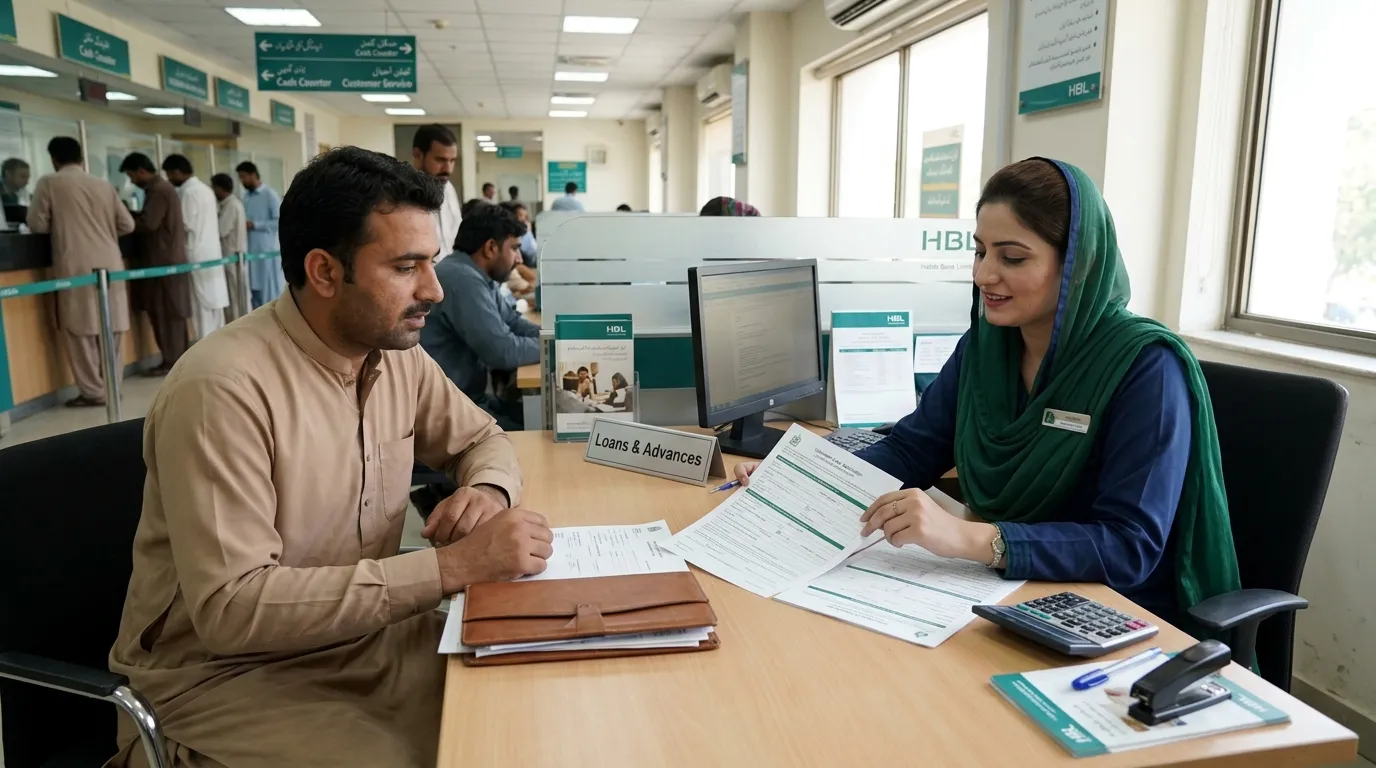
For securing a business loan in Pakistan, there are certain steps to be followed. You will have to know the kind of loan you will require for your business, create a realistic business plan, and then proceed to apply from the most suitable banking or governmental institution according to your profile.
This is not an arbitrary process but rather involves a systematic evaluation of your idea, documents, and repayment capacity.
The bottom line is very clear. Banks do not offer loans on the basis of ideas but on the basis of clarity, risks involved, and feasibility. The moment you understand this concept, everything will fall into place.
Step-by-Step Process to Apply
Getting a business loan is less about luck and more about preparation. Each step builds your credibility in front of the lender, and skipping even one step can slow down approval or reduce your chances.
Step 1: Decide Loan Type
Firstly, you have to determine which type of loan is suitable for your company. Every company may not require the same form of financing. Depending on how big or small your enterprise is, either a microfinance or a normal bank loan can suit your venture.
Secondly, it would be prudent to determine if you require a long-term loan or short-term one. Depending on the use of the loan, the repayment process will vary as banks design their repayment strategies depending on the purposes of the loans.
Step 2: Prepare Your Business Plan
The business plan is the key component that determines the seriousness with which your application is considered. It must contain clear details about your business activities, the source of income generation, your total expenses per month, and the means by which you intend to pay off the debt.
It does not have to be very sophisticated, but it must be well-structured and realistic. The revenues, costs, profits, and cash flows must be presented realistically. Otherwise, your application may be rejected or delayed.
Step 3: Compare Banks and Programs
All banks and schemes are not alike, hence the need for comparison prior to making an application. Some banks provide low interest rates at the expense of stringent conditions, while others may be easier to apply for but costlier.
Government-sponsored programs come with favorable terms such as subsidization, particularly those intended for start-ups and small firms. Microfinance organizations are less restrictive but provide smaller amounts. The choice largely depends on business size and capability to repay.
Step 4: Submit Application
Once you have selected your lender, you submit your application along with your documents and business plan. This step is usually straightforward, but accuracy matters a lot.
Any mismatch in income details, business information, or identity documents can slow things down. It is better to double-check everything before submission instead of fixing errors later during review.
Step 5: Loan Review and Approval
Once submitted, the bank will evaluate your application. They consider your business model, payment capabilities, past records, and even your market potential in some instances.
It is not uncommon to be asked for interviews or to supply additional documentation. This is nothing out of the ordinary and indicates that the application is being taken seriously. The amount of time it takes for approval may differ based on the organization or loan amount.
Step 6: Loan Disbursement
The process of disbursing the money takes place either through your business bank account or even to your suppliers, based on prior agreement. You will be issued an amortization table showing your monthly payments along with their respective interest amounts.
It is at this point where we move on from getting the loan to making timely repayments. It is essential to keep a clear repayment record for future financing purposes.
Types of Business Loans in Pakistan
Business financing in Pakistan comes in different forms, and each type serves a different kind of entrepreneur. Understanding these categories helps you avoid applying for the wrong product.
Bank Business Loans
Traditional banks offer structured business loans with fixed repayment schedules. These are suitable for established businesses with some financial history.
They usually require documentation, collateral in many cases, and a strong repayment plan. The advantage is higher loan amounts and relatively stable terms.
Government Loan Schemes
Government-backed schemes are designed to support small businesses and startups. These often come with lower interest rates and relaxed eligibility requirements compared to banks.
However, they may have specific conditions like business sector focus or documentation requirements. These schemes are good for people who are starting out and need affordable financing.
Microfinance Loans
Microfinance institutions focus on small-scale entrepreneurs who may not qualify for traditional bank loans. These loans are smaller in size but easier to access.
They are useful for very early-stage businesses or individuals testing a business idea. Repayment cycles are usually short and structured around cash flow.
Islamic Business Financing
Islamic financing follows Sharia-compliant models where interest is replaced with profit-sharing or trade-based structures. This option is available through Islamic banks and branches.
It is suitable for individuals who prefer non-interest-based financing models while still accessing formal business funding.
Eligibility Criteria for Business Loans
Eligibility depends on the lender, but most institutions look at a few common factors. You usually need to be a Pakistani citizen, have a valid CNIC, and a registered or at least clearly defined business idea.
Age requirements typically range between 21 to 60 years. Some lenders also prefer applicants with prior business experience or stable income sources. Credit history plays a major role, especially for bank loans. If you have previous defaults, approval becomes harder.
In some cases, collateral is required, especially for larger loan amounts. However, smaller loans or microfinance options may not require physical assets.
Documents Required
Documentation is a key part of the loan process, and incomplete paperwork is one of the main reasons for delays. You usually need your CNIC, passport-size photographs, and proof of address.
Business-related documents include your business registration (if available), NTN, and bank statements. A detailed business plan is also required, especially for banks and government schemes.
If you are applying for a secured loan, you may also need property documents or asset verification papers.
Interest Rates and Repayment Terms
Interest rates in Pakistan vary depending on the lender and type of loan. Bank loans usually have fixed or variable interest rates based on policy conditions. Government schemes often offer lower subsidized rates to support small businesses.
Microfinance loans may have slightly higher rates due to higher risk and smaller loan sizes. Repayment terms also vary. Some loans are short-term with monthly installments, while others are long-term and spread over several years.
The important thing is to always understand the total repayment amount, not just the interest rate. This gives you a clearer picture of financial pressure on your business.
FAQs
Can I get a business loan without collateral in Pakistan?
Yes, some microfinance institutions and government schemes offer unsecured loans, especially for small businesses, but the amount is usually limited.
What is the easiest loan to get for a startup?
Microfinance loans and certain government-backed programs are generally easier for startups because they have simpler eligibility requirements.
How long does loan approval take?
It usually takes anywhere from a few days to a few weeks, depending on the lender, documentation, and loan size.
What is the interest rate for business loans in Pakistan?
It varies widely depending on the bank or scheme, but it generally depends on policy rates, loan type, and risk profile of the borrower.
Conclusion
Getting a business loan in Pakistan is not about rushing the process; it is about understanding it. Once you break it into clear steps, from choosing the loan type to preparing documents and managing repayment, it becomes much easier to navigate.
The real difference between approval and rejection usually comes down to preparation. If your business plan is clear, your documents are complete, and your numbers make sense, the process becomes straightforward. And once financing is in place, you can focus on building and scaling your business instead of worrying about capital constraints.
Also Read: How to Register Business in Pakistan