
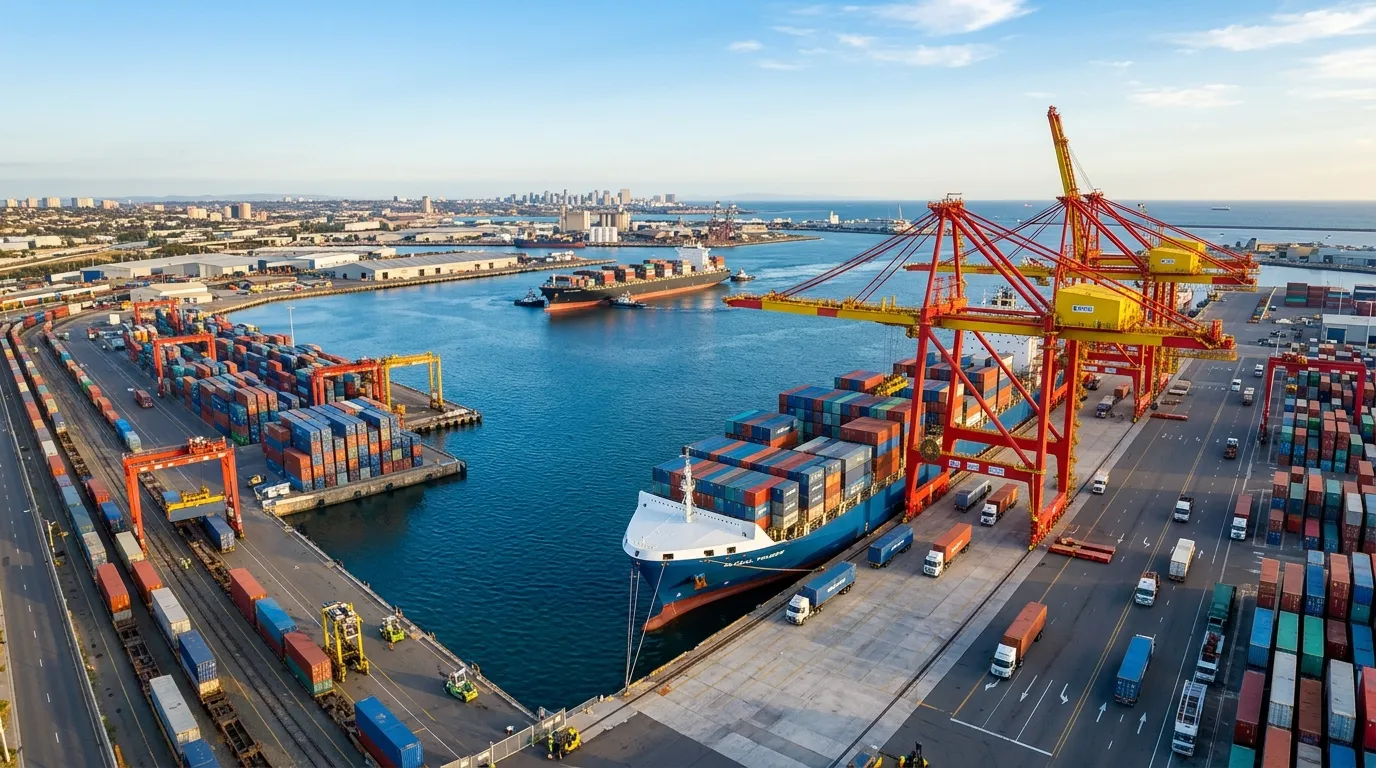
To start an import/export business in Pakistan, you’d have to select a product that has real demand (market value) and register the company properly, and set up banking and payment systems, and of course, build long-lasting connections with buyers and suppliers.
The structure or model you build has to be rule-based. So you understand each step, so it becomes predictable instead of fragmented and confusing.
But none of this is something you’s have to worry about as the guide below will walk you through every stage of buildin this business with ease and clarity!
Step-By-Step Guide To Start Import Export Business in Pakistan
An import export business runs on a very simple idea: you follow a sequence, and you respect that sequence. It is not about trying things randomly and hoping they work.
Each step leads into the next one, and when you understand that flow, the whole thing starts to feel structured instead of overwhelming. If you stay consistent with the process from product selection to getting paid, you reduce mistakes, and you build something that can actually scale.
Step 1: Choose Your Product
This is where most people either get it right or make it harder for themselves. Your product is not just what you like, it is what the market already wants.
If you are exporting, it is smarter to start with industries where Pakistan already has strength, like textiles, rice, leather goods, sports items, and surgical instruments. These already have demand, which means you are not starting from zero.
If you are importing, then the thinking shifts slightly. You look for products that already sell consistently in the local market. Electronics, mobile accessories, and machinery are simple examples because demand is already proven.
Now the part most people ignore is cost calculation. You need to look at landed cost, not just product price. That includes freight, insurance, customs duty, and taxes.
If you skip this, your pricing will be off, and your margins will disappear without you realizing it. Also check if your product needs any certifications or restrictions, especially if it is related to food, chemicals, or medical use.
Step 2: Select Your Business Structure
This step is more about setting a clean base for your operations. You need a structure that fits how you are starting. If you are alone, a sole proprietorship is the simplest and quickest. If you are working with someone, then a partnership works, but you need clarity in roles and agreements.
If you are thinking ahead and planning to grow or work with larger clients, then a private limited company gives you more structure and credibility. The idea here is not to overcomplicate it, just pick what fits your current stage while keeping future growth in mind.
Step 3: Register Your Business
Once your structure is clear, you make it official. You register your business and get your National Tax Number. If you are forming a company, you also register with the corporate authority.
This step is what allows you to operate properly. It lets you open bank accounts, sign contracts, and deal with customs and official systems. Without this, things might seem manageable in the beginning, but they break down as soon as transactions start getting serious.
Step 4: Open a Business Bank Account
Now you connect your business to the financial system. A business bank account is necessary because all international payments go through banks. You will need your registration documents and tax number to open it.
It is better to have both a local currency account and a foreign currency account, usually in dollars. Banks also provide trade services like letters of credit and international transfers. Choosing a bank that understands trade saves you time because they guide you through processes instead of complicating them.
Step 5: Get Import Export License
There is no single license document, but there is a set of requirements you need to complete. This includes having your NTN, registering for sales tax if needed, and becoming a member of a chamber of commerce.
Once these are in place, you are legally allowed to trade.
Without them, your shipments will not move through customs properly, and your documents will not be processed.
Step 6: Register with Trade Bodies
Joining a chamber of commerce is one of those steps that seems small but actually matters a lot. It adds credibility to your business and connects you to a network of people already working in the same space.
Some export documents also need chamber attestation, so membership becomes necessary anyway. On top of that, you get access to information and opportunities that make it easier to find buyers or suppliers.
Step 7: Find International Buyers or Suppliers
This is where things start becoming real. If you are exporting, you need buyers. If you are importing, you need suppliers. Platforms like Alibaba, trade directories, and exhibitions are common ways to connect.
But the key here is patience. You do not jump into large deals immediately. You verify who you are dealing with, ask for samples, and start small. Clear communication matters a lot. Product details, pricing, timelines, and payment terms should all be agreed properly so there is no confusion later.
Step 8: Understand Shipping and Logistics
Shipping feels technical in the beginning, but once you understand the basics, it becomes routine. You mainly choose between air and sea freight. Air is fast but costs more, while sea is slower but better for bulk shipments.
You also need to understand basic terms like FOB, CIF, and EXW.
These define who pays for shipping, who handles insurance, and where responsibility shifts. Most people work with freight forwarders who handle logistics, documentation, and customs clearance, so choosing the right one makes a big difference.
Step 9: Learn Payment Methods
Payments in international trade are about managing trust. The common methods are advance payment, letter of credit, and open account.
A letter of credit is secure because the bank guarantees payment once conditions are met, but it comes with paperwork and charges. Advance payment is safer for you but may not suit every buyer. Open account means payment after delivery, which is only safe when trust is already built.
So the approach is simple, match the payment method with the level of trust and the size of the deal.
Step 10: Handle Documentation
Documentation is where small mistakes create big delays. You need documents like a commercial invoice, packing list, bill of lading or airway bill, and certificate of origin. Some products also require extra certificates depending on their type.
For exports, you file export declarations. For imports, you handle customs declarations and duties. The important thing is accuracy. Even a small mismatch can hold your shipment, so reviewing everything carefully is part of the process.
Legal Requirements for Import Export Business in Pakistan
Legally, the setup is straightforward if you follow it properly. You need a registered business, a valid NTN, and chamber membership. Depending on your product, there may be additional approvals, but the base remains the same.
You also need to follow customs and tax rules. Keeping your records organized makes everything smoother, especially when dealing with banks or authorities.
Best Products to Export from Pakistan
Exports work best when you stay within industries that already have demand. Textiles, rice, leather, sports goods, and surgical instruments are strong areas. These already have buyers globally, so your job is to maintain quality and consistency.
The focus should always be on long-term relationships. Buyers are not just looking for a one-time deal. They want reliability, and that is what keeps your business stable.
Best Products to Import in Pakistan
For imports, consistency of demand is the key factor. Products like electronics, accessories, and machinery sell regularly, which keeps your business moving.
You can also import raw materials and supply them locally, which can create more stable income. Just make sure your pricing includes all costs so you stay competitive.
Cost of Starting Import Export Business in Pakistan
Starting does not require huge capital. Many people begin with PKR 100,000 to PKR 300,000 by testing small deals and learning the process.
As you grow, your costs increase naturally with order size and operations. The important part is knowing your numbers clearly so your margins stay intact.
Common Challenges and How to Handle Them
Every business has challenges, and this one is no different. Finding reliable partners takes time, so always verify and start small. Shipping delays can happen, but working with the right logistics partners reduces risk.
Currency changes can affect profit, so careful pricing helps manage that. Documentation errors are also common, but they can be avoided with attention to detail.
Frequently Asked Questions
Do I need a license to start import export business in Pakistan?
You need registration, a tax number, and chamber membership. These together allow you to operate legally.
How much investment is required?
You can start with around PKR 100,000 to PKR 300,000 and scale as your business grows.
Can I start import export business from home?
Yes, most of the work is handled online, so starting from home is very common.
Which products are most profitable?
Profit depends on demand and margins, but textiles and rice work well for exports, while electronics and accessories perform well for imports.
How do I find foreign buyers?
You can use online platforms, attend trade events, or reach out directly. Building trust over time is what matters.
Conclusion
When you look at it closely, the import export business is not complicated, it just requires you to follow a clear process without skipping steps.
Once you understand how everything connects, from product to payment, the system becomes predictable. And once it is predictable, you can scale it with confidence instead of guesswork.
Also Read: How to register business in pakistan