
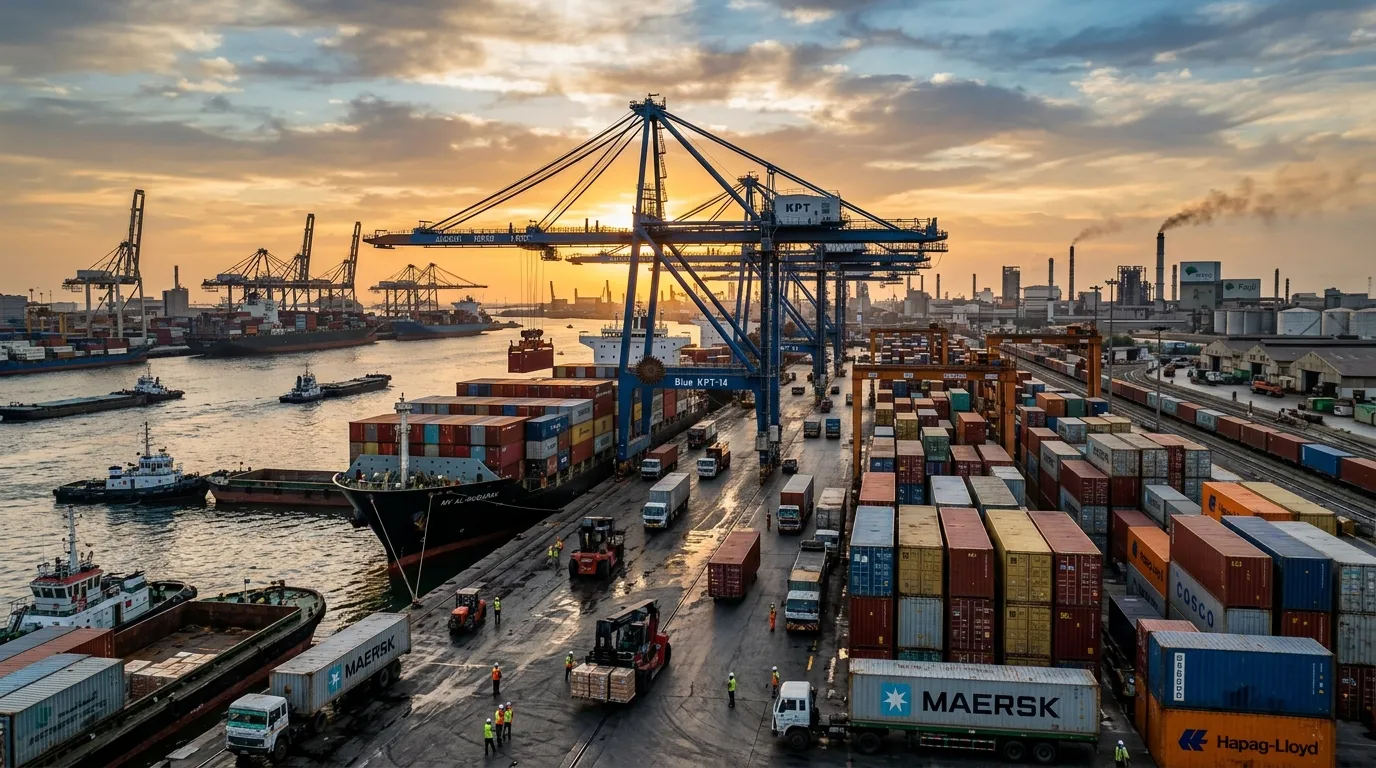
Export Processing Zones (EPZs) in Pakistan are specialized industrial areas that offer duty-free imports, tax incentives, full foreign ownership, and streamlined regulatory processes to support export-oriented businesses with maximum operational efficiency.
This article outlines the core technical features of EPZs so you can clearly assess how they function and why they are structured to attract foreign investment.
Duty-Free Import of Machinery and Raw Materials
A defining feature of EPZs is the complete exemption from customs duties on imports required for production.
Businesses operating within EPZs can import plant, machinery, equipment, spare parts, and raw materials without paying customs duties, sales tax, or federal excise duty. This applies to both initial setup and ongoing production requirements.
There are no restrictions on the origin of imported goods, allowing companies to source inputs from the most cost-effective or technologically advanced suppliers globally.
Raw materials imported into EPZs are strictly bonded, meaning they must be used for export-oriented production. However, wastage allowances are defined under customs rules, and disposal of scrap is regulated through specific procedures.
Machinery imported into EPZs can also be replaced, upgraded, or re-exported without triggering tax liabilities, provided compliance requirements are met.
This duty-free regime significantly reduces capital expenditure and improves cost efficiency for manufacturers.
Tax Incentives for Export Businesses
EPZs provide a comprehensive tax relief framework designed specifically for export-driven enterprises.
Companies operating in these zones are exempt from income tax on profits generated from exports for a specified period, often up to 10 years from the start of commercial production, subject to policy conditions.
There is no sales tax on goods and services consumed within the EPZ, which includes utilities, raw materials, and operational inputs.
Federal excise duty is also not applicable within the zones, further reducing the overall tax burden.
In addition, there is no withholding tax on imports into EPZs, simplifying financial management and reducing compliance requirements.
These tax incentives are structured to ensure that businesses can operate with minimal fiscal constraints while maintaining global price competitiveness.
100% Foreign Ownership
EPZ regulations allow complete foreign equity ownership across most sectors operating within the zones.
Investors can establish wholly owned subsidiaries without the need for a local partner or joint venture arrangement. This ensures full control over business decisions, operations, and financial management.
Foreign companies are also allowed to appoint expatriate staff, including technical experts and management personnel. Visa and work permit processes are facilitated through EPZ authorities to ensure smooth onboarding.
There are no restrictions on the transfer or sale of shares between foreign entities. Investors can restructure ownership, enter partnerships, or exit the market without complex approval processes.
This ownership flexibility aligns EPZs in Pakistan with global free zone standards and enhances investor confidence.
Profit Repatriation
EPZs provide unrestricted repatriation of profits and capital, which is a critical requirement for foreign investors.
Companies are allowed to transfer profits, dividends, royalties, and technical fees abroad in foreign currency without prior approval from regulatory authorities.
There are no exchange control restrictions within EPZs, ensuring that investors can manage their funds freely.
Capital invested in EPZ businesses can also be repatriated upon disinvestment, liquidation, or sale of the business.
Banking transactions are facilitated through authorized dealers, and foreign currency accounts can be maintained to support international financial operations.
This feature minimizes financial risk and ensures liquidity for foreign investors.
Simplified Business Registration
EPZs operate under a centralized administrative system that simplifies the process of establishing a business.
The Export Processing Zones Authority acts as a one-window facilitator, handling approvals for company registration, licensing, and operational permissions.
Investors are required to submit a detailed project proposal, including business activities, investment size, production capacity, and export targets.
With the support of EPZ Consultants, this process can be handled more efficiently with accurate documentation and proper planning.
Once approved, a Letter of Permission is issued, which serves as the primary authorization to establish operations within the zone.
Documentation requirements are streamlined, and approval timelines are significantly shorter compared to standard industrial setups.
Customs registration, utility connections, and regulatory compliance are also managed through the same authority, reducing administrative complexity.
Developed Industrial Infrastructure
EPZs are equipped with purpose-built infrastructure designed to support industrial operations.
This includes pre-developed plots, ready-to-use factory buildings, internal road networks, drainage systems, and storage facilities.
Zones are secured through controlled access points, surveillance systems, and dedicated security personnel to ensure safety of assets and operations.
Utilities such as electricity, gas, water, and telecommunications are provided through dedicated networks to ensure consistent supply.
Some EPZs also include on-site facilities such as banks, customs offices, and administrative centers, allowing businesses to manage operations efficiently without external dependencies.
This infrastructure reduces setup time and supports uninterrupted production.
Efficient Customs and Export Procedures
EPZs are structured to facilitate fast and efficient movement of goods.
Customs operations within EPZs are handled through on-site offices, allowing real-time processing of import and export documentation.
Goods entering the zone are cleared under a bonded system, which eliminates the need for standard customs procedures applicable outside EPZs.
Exports from EPZs are processed with minimal documentation and faster clearance times, ensuring timely delivery to international markets.
Electronic documentation systems are often used to streamline procedures and reduce paperwork.
There are also provisions for temporary imports, re-exports, and subcontracting under defined regulations, providing operational flexibility.
Access to Skilled Labor
Pakistan offers a large and diverse labor force, and EPZs provide access to both skilled and semi-skilled workers.
Industries such as textiles, manufacturing, IT services, and engineering benefit from a workforce with relevant technical expertise.
EPZs also allow companies to hire expatriate professionals where specialized skills are required.
Labor laws within EPZs are relatively flexible, allowing businesses to structure employment contracts according to operational needs.
Training and skill development programs are often supported by both government and private sector initiatives, ensuring a steady supply of qualified workers.
Lower labor costs compared to many competing markets further enhance the cost advantage for businesses operating within EPZs.
Conclusion
EPZs in Pakistan are structured to provide a highly efficient and investor-friendly environment through duty-free imports, tax incentives, full foreign ownership, and simplified regulatory processes.
These features collectively reduce costs, minimize administrative barriers, and support seamless export operations.
Also Read: Benefits of Investing in EPZs For Foreign Investors in Pakistan