
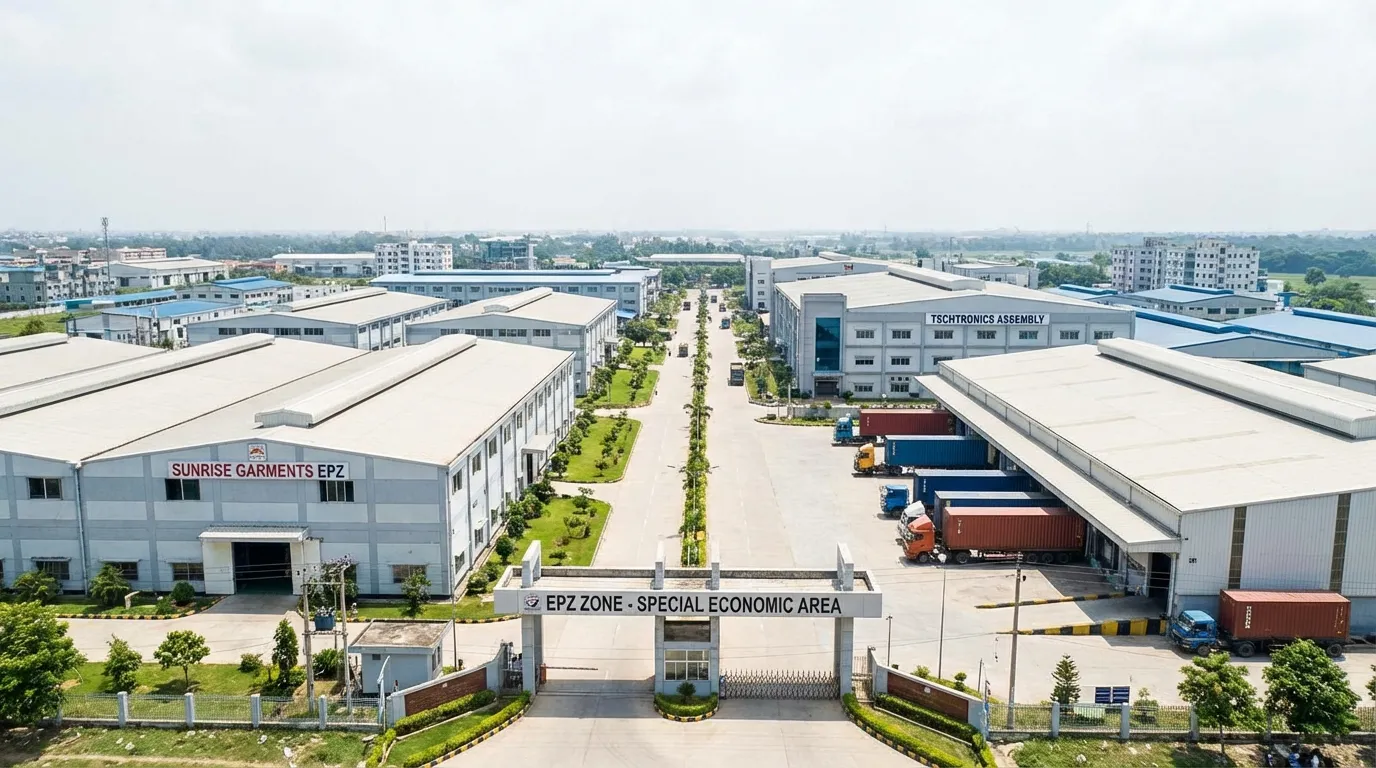
The reason why the industries that are actually thriving inside Pakistan do well is pretty simple when you strip everything down: EPZs are built to make exporting smoother, cheaper, and far less complicated than normal industrial setups.
If you look at how businesses behave inside these zones, you start noticing a pattern where anything that depends on imported inputs and exports tends to naturally perform betterr, especially when guided by EPZ consultants who understand the system.
So let’s go through the main sectors in a way that feels practical and grounded rather than overly technical.
Textile & Garment Manufacturing
Textiles and garments are basically the heart of EPZ activity in Pakistan. It makes sense because this industry is always dealing with imported inputs like fabric, yarn, dyes, and finishing chemicals, and EPZs take away a lot of the cost pressure by allowing these materials to come in duty-free.
In practice, the workflow is quite straightforward. Materials are imported, then they go through cutting, stitching, washing, printing, and finishing, and finally, the finished garments are packed and shipped out for export.
There is not a lot of friction in between, which is exactly why companies like operating here. Everything moves in a clean loop from import to export.
Another thing that helps is the availability of a ready workforce that already understands basic and advanced garment production work.
So companies are not starting from zero. They can scale faster, train quicker, and respond to orders without long delays. When you combine that with stable utilities and predictable customs handling, the whole setup just feels easier to run day to day.
Leather & Sports Goods Industry
Leather and sports goods is another strong category, especially in clusters like Sialkot where the skill base is already well developed.
EPZs add value here mainly by reducing the cost of imported materials like tanning chemicals, synthetic leather alternatives, stitching tools, and specialized machinery.
What you usually see in this industry is a very export-heavy model. Products like footballs, gloves, sports kits, protective gear, and leather accessories are made specifically for international buyers.
Since almost everything is going abroad anyway, EPZ rules around limited local sales do not really create a problem.
The bigger advantage is consistency. Global buyers want the same quality every time, and EPZ environments help maintain that because factories get stable infrastructure, smoother customs flow, and fewer interruptions in production.
That kind of stability matters more than people think in industries where even small variations can affect brand contracts.
Electronics & Light Engineering
Electronics and light engineering are still developing inside EPZs, but you can already see how it is starting to fit in.
Most of these businesses rely on imported parts like circuit boards, chips, wiring systems, and small mechanical components, and EPZs make it easier to bring all of that in without extra duty costs.
The production style here is mostly assembly-based. You import components, assemble them into finished products like small appliances or electronic units, and then export them.
The model is very cost sensitive, so even small savings on imports make a big difference in competitiveness.
What also helps is the basic infrastructure inside EPZs. Stable electricity, controlled industrial spaces, and organized logistics mean companies are not constantly dealing with interruptions that can slow down production lines. For electronics, where timing and precision matter, that stability is a real advantage.
Pharmaceuticals & Chemicals
Pharmaceuticals and chemical production inside EPZs is more controlled and detail heavy, but it works well because of how inputs and compliance are managed.
Companies in this space bring in active pharmaceutical ingredients, stabilizers, chemical compounds, and packaging materials, all without paying import duties. After that, they process everything into finished medicines, formulations, or industrial chemical products for export markets.
The key thing here is predictability. Pharmaceutical production cannot afford sudden disruptions or inconsistent input costs.
EPZs help reduce that pressure by keeping import costs stable and simplifying movement of materials through bonded systems.
Another important point is compliance. Since pharma exports often need to meet international quality standards, having a controlled production environment makes it easier to maintain consistency across batches. That is something global buyers care about a lot.
Food Processing & Agro-Based Industries
Food processing is slowly growing inside EPZs, and it covers things like packaged fruits, vegetables, rice products, seafood, spices, and ready-to-export food items.
What makes EPZs useful here is how they handle timing and supply gaps. Agriculture is seasonal, so companies often need to balance local raw materials with imported ingredients or packaging materials. Duty-free import options help keep that balance financially workable.
Storage and handling also matter a lot in this industry. EPZs usually offer better cold storage systems and controlled warehousing, which helps maintain product quality before shipment.
When you are dealing with export food products, even small delays or temperature changes can affect acceptance in foreign markets, so this kind of setup makes operations more reliable.
IT, Software & Digital Services
IT and digital services might feel different from manufacturing, but they still benefit from EPZs in a practical way. This includes software development firms, outsourcing centers, data processing units, and other digital service providers working with international clients.
Since their revenue is already export-based, EPZ rules around foreign currency handling make things simpler. Payments can come in foreign currency accounts, and profit repatriation is more straightforward compared to standard setups. That alone removes a lot of financial friction for global companies.
On top of that, operating costs are generally lower, and there is access to a young, English-speaking workforce that is increasingly skilled in digital tools.
So even though this is not a physical production industry, the EPZ environment still supports it in a very functional way.
Automotive & Auto Parts Manufacturing
Automotive and auto parts manufacturing is another sector that is slowly gaining ground in EPZs. This includes engine components, brake systems, wiring harnesses, filters, and various precision parts.
The biggest advantage here is cost control on inputs. These companies rely heavily on imported materials like steel, rubber, plastics, and alloys, and EPZs allow them to bring those in without customs duties, which helps keep production competitive.
Another practical benefit is how well EPZs support assembly-style production. Automotive supply chains depend on timing, and delays between importing parts and exporting finished components can create serious inefficiencies. EPZ systems help reduce that gap by keeping logistics and customs flow more organized.
A lot of these firms also supply global automotive brands, so consistency and timing are everything. The structure of EPZs helps them maintain both without dealing with unnecessary procedural delays.
Conclusion
When you step back and look at all these industries together, it becomes pretty clear that EPZs are not random industrial spaces.
They are designed for businesses that rely on imported inputs and export-heavy output, and that is exactly why textiles, leather goods, electronics, pharmaceuticals, food processing, IT services, and auto parts all fit so naturally into the system.
What really makes them work is not just one benefit like tax relief or duty-free imports, but the way everything connects. Lower input costs, smoother customs movement, stable infrastructure, and simpler export processes all come together in one place.
For companies that want a less complicated way to produce for global markets, that combination is usually what makes EPZs worth serious consideration.