
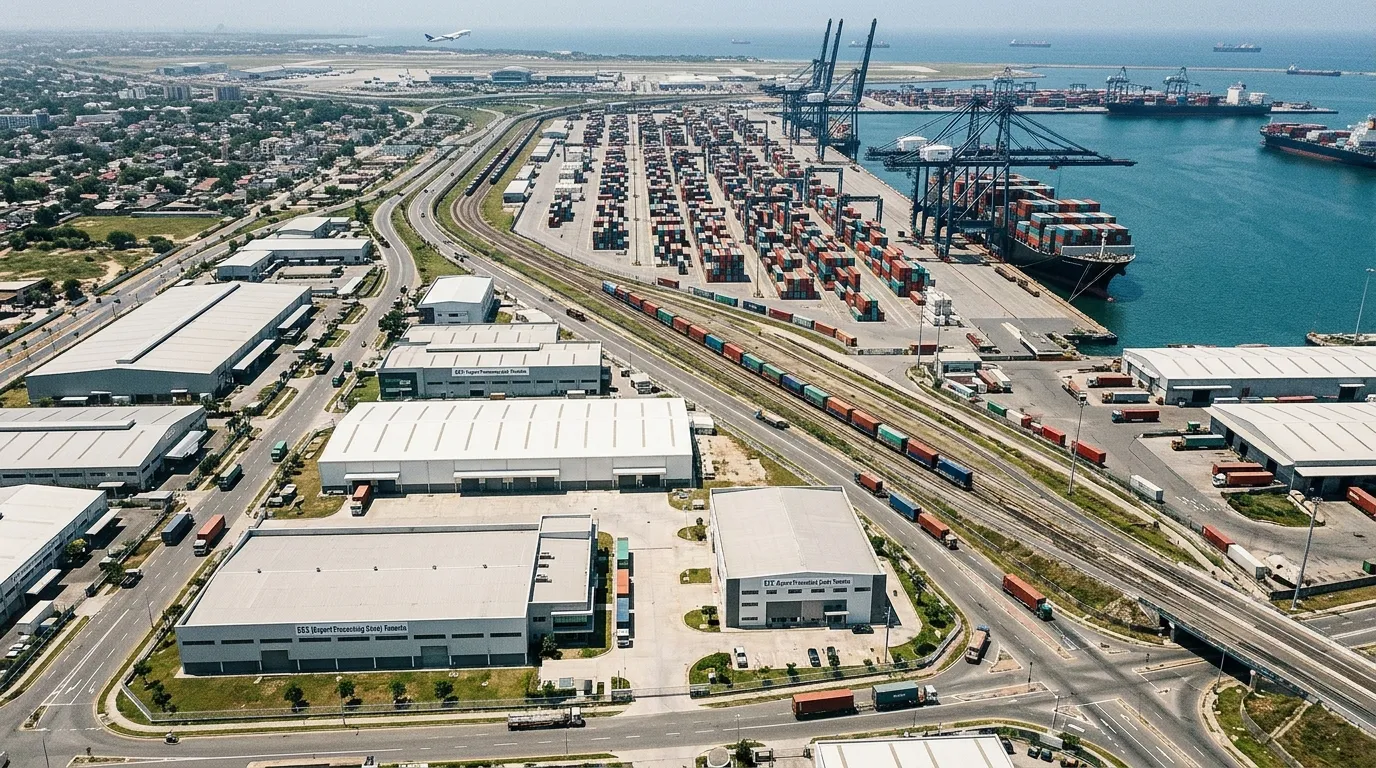
You choose the right location within an Export Processing Zone in Pakistan by aligning your industry needs with the right city, checking port access and infrastructure, comparing costs, and validating labor, security, and authority support before committing.
Selecting an EPZ site is not just about getting tax incentives. It directly affects your logistics cost, production speed, hiring quality, and long term scalability. Two zones can offer the same incentives but perform very differently in real operations. That is why a structured approach matters. The steps below show how to evaluate locations in a practical, business-first way.
1. Pick the Right EPZ City
Begin with the city since it defines your natural advantages. There are many areas within Pakistan, such as the Karachi Export Processing Zone, Gwadar Export Processing Zone, Sialkot Export Processing Zone, and Risalpur Export Processing Zone.
Karachi can accommodate exporters who have high volumes and rely on shipping via the sea. Sialkot can help you if you wish to focus on exports and you have already created a foundation in SMEs. Gwadar is helpful in establishing future trade routes, although its infrastructure needs further development. Risalpur might be inexpensive for some industries but not for others; moreover, its industrial presence is limited.
2. Check Distance to Port and Transport
Logistics is a major cost driver. Determine real distance and time to the nearest port, airport, and highways. With regard to exports by sea, the closer to Port Qasim and Karachi Ports, the shorter the transit time, cost associated with loading and unloading containers, and cost of trucking.
Look into road quality, traffic flow, and availability of dependable logistics providers. The shortest distance on the map may be longer than the actual trip owing to road connectivity, congestion, and other logistical constraints. Consider rail transport when applicable, and accessibility to cargo airports for high-value shipments.
3. Look at Infrastructure Quality
Utilties need to be evaluated in depth, beyond just theoretical calculations. It is necessary to assess the dependability of the electric power system, its backup plans, and tariff schedules. The more often there are interruptions in the supply of electricity, the more downtime will be suffered, and generators will have to be purchased.
The telecommunications network is just as important. The stability of the internet connection and its backup options influence the business operation process, communication with international buyers, and reporting.
4. Match Location with Your Industry
Each industry will have its own cluster requirements. Garments and textiles can do well in areas close to existing supply networks such as Sialkot and Karachi. Light engineering and surgical products are aided by Sialkot’s supply chain. Seafood processing fits into coastal zones around Karachi.
Where do your raw materials and subcontractors come from? If they are nearby, you cut down on logistics and inventory costs. Also consider whether there are any other businesses operating in that sector already within the zone.
5. Check Availability of Skilled Labor
Availability of labor is an important consideration as far as cost and quality are concerned. It would be necessary to evaluate the availability of labor for your particular positions like machine operators, technicians, quality control personnel, and supervisors.
It would also be important to evaluate the availability of vocational schools and training centers nearby. Labor is available in greater numbers in Karachi than in other places like Sialkot where specialization in manufacturing goods for export prevails. Other industrial areas like Gwadar might require more training investment by you.
6. Compare Cost of Land and Facilities
It’s not all about land costs but a comprehensive analysis of the total costs. Lease rates, development charges, connection to utilities, and services levied in that zone should all be included.
Determine the cost per sq ft between built up area vs building your own. Consider the terms and conditions of leasing including tenure and escalation. A relatively lower initial cost in an outer zone may prove more expensive due to higher cost of transport and labor. Make a simple capex-opex model for three to five years.
7. Check Security and Business Environment
The effects of security include insurance, employee protection, and business sustainability. Examine ground-level security in the zone, considering access controls, monitoring systems, and response mechanisms.
Additionally, consider the broader business environment. Evaluate the legal and social climate, ease of transportation for employees, and availability of service providers such as banks, customs agents, and maintenance companies. Industrial zones located in large cities typically have more developed ecosystems, reducing business hassles.
8. Check Future Growth Potential
Think bigger than your present capacity. Will the location allow you to expand in the coming 2 to 5 years? Assess the availability of adjoining lands for expansion, the potential for expanding warehouses, and the capability to increase utilities.
Consider future infrastructure development in the surrounding area. For instance, construction activity within Gwadar Export Processing Zone could enhance the region’s connectivity and provide an advantage to those who settle there earlier. Choose locations that will not restrict growth and require relocation in the future.
9. Check EPZ Authority Support
The degree of cooperation provided by the Export Processing Zones Authority is significant during the course of day-to-day operations. Determine their efficiency in granting permits, licenses, customs clearance, and dispute resolution.
Try to speak with current tenants. Inquire about the time required for orientation and paperwork. Effective assistance from the authority decreases the likelihood of problems related to the importing of equipment and export documentation. Additionally, investigate any incentives available to your organization.
10. Visit Before Final Decision
Visit the selected locations before making a selection. Images in photographs and brochures cannot capture the actual situation on ground level.
Do your own inspection of the location, look for road condition, noise pollution, traffic congestion, and talk to neighboring establishments. Check the utilities, loading areas, and access points. Go to the site at various times during the day to assess the maximum activity period. A site visit will help identify problems that may not be clear in documentation.
Conclusion
Choosing the right EPZ location in Pakistan is a strategic decision that affects cost, efficiency, and growth. Start with the right city, validate logistics and infrastructure, align the location with your industry, and confirm labor and authority support before committing.
When you evaluate each factor step by step and verify on ground conditions, you reduce risk and set up your operation for smoother execution and long term scalability.
Also Read: Project Management Tips for EPZ Developments